

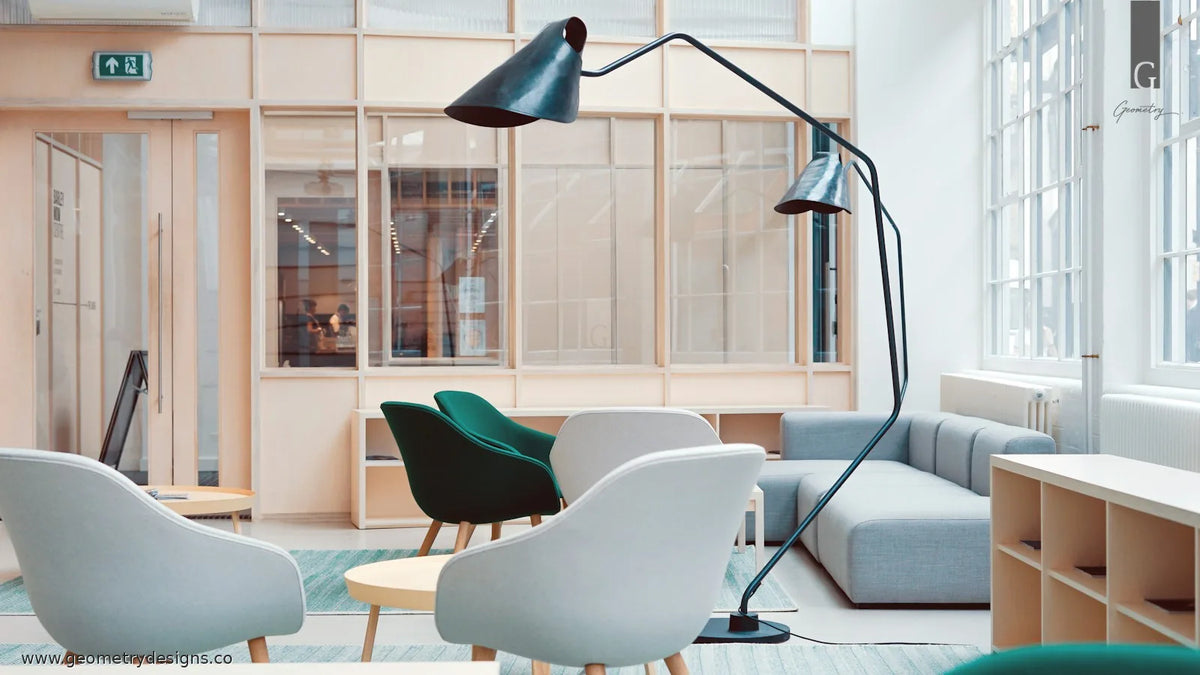
Answer: Integrate a work corner into a living room by giving work a quiet edge (not a second living-room scene), protecting the main walk path, choosing a desk and chair that match the room's materials, and planning storage so tools can close away before guests arrive.
Open-plan Indian apartments and villas often ask one room to do two jobs: hold evening conversation and hold daytime focus. The failure mode is not "having a desk." It is letting cables, printer stacks, and a mismatched office chair announce themselves as a second, louder room. Geometry clients who keep calm usually treat the work corner as a designed transition - a deliberate edge inside the living space - not as a temporary laptop on the dining table that never left.
This Design Education And Trends guide shows how to plan that transition without inventing a separate study. Use it before you browse Geometry's full collection or brief a custom desk or seating piece for the corner.
Why Does a Work Corner Need a Transition, Not Just a Desk?
A desk alone does not resolve conflict between focus and hospitality. Guests still read the room through sightlines, clutter, and chair posture. If the laptop faces the sofa and the power strip sits in the walk path, the living room never fully returns to living.
Designers often start with the same scan described in what a designer notices first in a luxury living room: what leads the eye, where bodies move, and what feels temporary. A work corner that fails those three checks will keep interrupting evenings even if the desk itself is beautiful.
Where Should the Work Corner Sit Relative to Seating?
Prefer a side or window edge that does not steal the room's primary focal wall. The sofa conversation should still own the main axis. Placing work beside a quieter wall, a secondary window, or a slight architectural recess keeps focus available without competing with the statement seating or art wall.
Avoid parking the desk as an island in the center of the rug. Islands read as obstruction. If the only available wall is near the TV or media wall, re-check scale carefully - the same discipline used when you set a TV wall around a handcrafted focal piece applies here: one visual lead, not two loud centers.
How Do You Keep Walk Paths Calm When Work Tools Arrive?
Measure the path from entry to sofa to balcony or dining before you place the desk. Leave enough clearance for someone to pass behind a seated worker without brushing a chair back. Temporary cable runs across that path are a daily irritation disguised as a small compromise.
A layout refresh mindset helps. The method in how to refresh a room layout before a bigger purchase works well here: tape the desk footprint for a week, host one evening gathering, then decide whether the corner still feels like hospitality.
What Desk Scale and Finish Belong in a Living Room?
Choose a desk that can pass as furniture when the laptop is closed. Slim depth, quiet legs, and a finish that matches nearby wood or consoles matter more than "office system" features. A console-depth writing desk often behaves better in living rooms than a deep workstation that forces the chair into the walk path.
Material honesty matters. If the living room already shows handcrafted wood, a plastic laminate desk fights the room. If you are commissioning or selecting wood furniture, the same cues used in what makes handcrafted wood joinery feel premium apply at desk scale: clean joins, consistent finish, and proportions that look intentional next to seating.
How Should Storage and Cables Disappear Before Guests?
Plan closed storage within arm's reach of the desk: a shallow drawer stack, a low cabinet, or a nearby console that can hold chargers, notebooks, and a portable monitor. Open trays look styled in photos and messy after three workdays.
Cable discipline is part of the transition. One vertical channel, a floor box if the apartment allows it, or a furniture-integrated grommet keeps the living floor clean. If you already use a statement console elsewhere in the home, borrow the placement discipline from how to place a statement console without crowding the entryway: clear the front plane, keep objects few, and let the piece finish the wall rather than store overflow.
How Do Lighting and Sound Separate Focus From Evening Calm?
Give the work corner its own task light that can switch off independently of the living-room layer. A warm, directed lamp on the desk is enough; a second bright overhead zone over the desk often makes the corner feel like an office after dark.
For sound, soft surfaces near the corner - rug under the chair path, upholstered seating nearby, curtains if the desk faces glass - reduce the click-and-call echo that turns open plans sharp. Lighting layout principles from balanced luxury lighting layouts in Indian living rooms still apply: layers, not one harsh wash.
When Should the Corner Become Custom Instead of Catalogue?
Choose custom when the only workable wall has an awkward niche width, when you need the desk to align exactly with existing joinery, or when storage must hide a printer without looking like office cabinetry. Catalogue works when a standard slim desk already clears paths and matches finishes.
The decision frame in catalogue piece or bespoke furniture: how to decide is useful here: if the corner fails on fit, storage, or finish match, brief the studio with measured photos, walk-path widths, and the living-room material palette - not only a desk wishlist.
FAQ
Can a work corner face the sofa?
Only if the laptop can close into a calm plane and the chair does not block the conversation axis. Side-facing or window-facing usually protects hospitality better.
Do I need a room divider?
Not always. A low cabinet, a consistent rug edge, or a lighting change can mark the transition. Tall screens help only when they do not shrink the living room's light and sightlines.
What chair works in a living room work corner?
Prefer a chair whose back and material can sit near living seating without looking clinical. Test seat height against the desk; comfort for two-hour work sessions still matters.
How do I stop work clutter returning every week?
Give every daily tool a closed home within one step of the desk, and end the workday with a two-minute reset: laptop closed, cables coiled, surface cleared to one object.
Is a dining table a good temporary desk?
As a short bridge, yes. As a permanent plan, it usually steals dining and leaves the living room visually unfinished. Brief a real corner once the layout test is done.
A calm work-to-living transition is less about hiding work and more about designing its edge. When the desk, light, storage, and path agree with the living room's materials and hospitality, the same open plan can hold focus by day and guests by evening - without asking either mode to apologize for the other. Explore seating, consoles, and custom briefs through Geometry Designs when you are ready to make the corner permanent.


