

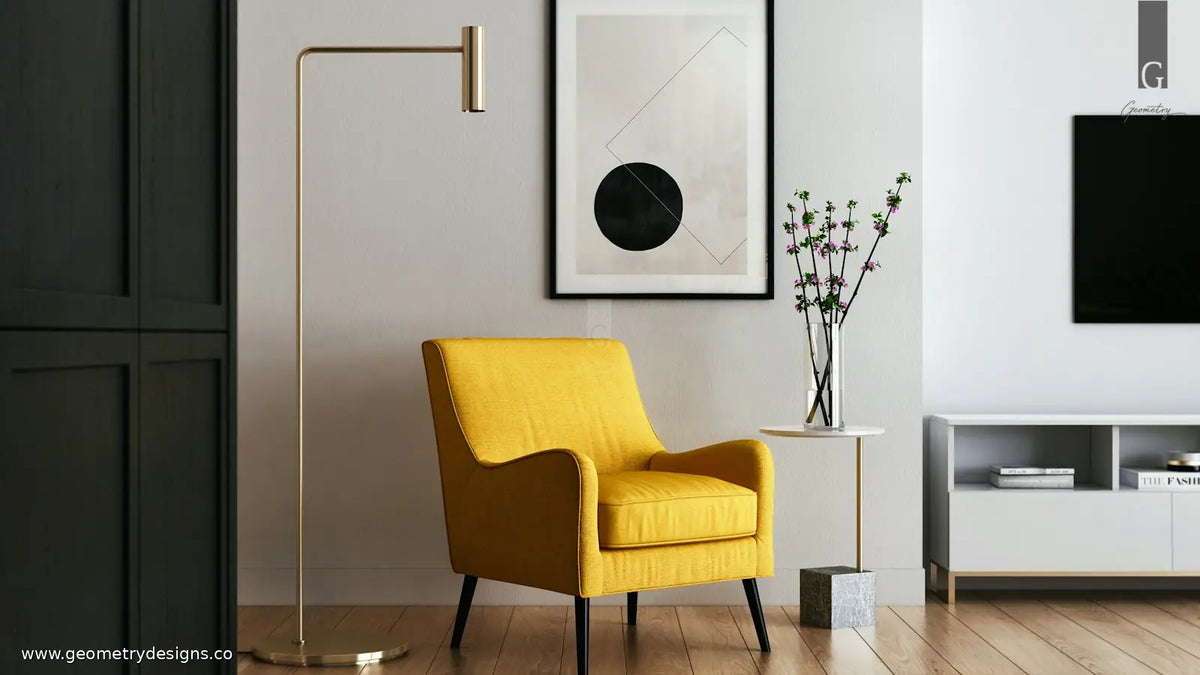
Answer: Place a TV wall without overpowering handcrafted furniture by deciding one visual lead first, sizing the screen to the wall rather than the room's ego, keeping finishes quieter than the craft piece, and lighting the furniture as architecture - not competing with screen glare.
In many Indian living rooms the television is unavoidable, but it does not have to own the room. When a Geometry-style handcrafted chair, console, or sculptural seat is meant to be the focal piece, the TV wall should become a calm support system: readable, practical, and visually quieter than the craft.
This Geometry Journal guide shows how to set a TV wall around a handcrafted focal piece - so media needs and design intent can share one room without visual noise.
What should lead the room: the TV or the handcrafted piece?
Decide the lead before you hang anything. If the handcrafted piece is the statement, the TV wall must behave like background architecture.
- Name one primary focal object in the seating zone (chair, loveseat, console, or art-backed craft piece).
- Let the TV sit on a secondary axis - adjacent wall, quieter plane, or a recessed panel - not centred as a second "hero" beside the craft silhouette.
- If both must face the sofa, give the craft piece stronger silhouette, finish, or lighting hierarchy, and keep the TV wall flatter and calmer.
- Avoid twin focal fights: a loud media unit plus a sculptural chair plus busy art on the same sightline.
Related: What a Designer Notices First in a Luxury Living Room helps you audit what the eye actually reads first.
How do you size and place the screen so craft still reads?
Screen size should follow wall calm and viewing distance, not catalogue maximums. An oversized panel can flatten a carefully made furniture silhouette.
- Mount so the screen centre sits near comfortable seated eye height for your main sofa run - not floating too high like a public lobby.
- Leave breathing wall around the panel; edge-to-edge media walls make craft furniture look smaller by comparison.
- Prefer a slim profile and quiet bezel over a heavy frame that adds a second silhouette next to handcrafted legs or arms.
- If the craft piece sits beside the TV wall, keep at least a clear vertical gap so the furniture outline remains readable in daylight and evening light.
For circulation and placement discipline before adding media hardware, see How to Check Room Flow Before Adding a Statement Piece.
Which finishes and media furniture keep the TV wall quiet?
The TV wall should borrow materials from the room without matching the craft piece stroke-for-stroke. Quiet support beats twin drama.
- Choose matte or low-sheen wall and cabinetry finishes so reflections do not compete with wood grain, carving, or upholstery texture.
- Keep media storage closed or rhythmically simple; open shelves filled with devices add visual noise beside a statement seat.
- Repeat one wood tone or one quiet metal family already used in the room - do not introduce a third high-contrast finish only for the TV unit.
- If you use a console under or near the screen, let it stay architecturally calm so the handcrafted focal piece remains the character.
For console finish language when media and entry pieces share a home, read What to Look For in a Console Table Finish and Frame.
How should lighting protect craft detail next to a screen?
Screens emit light; craft needs controlled light. Plan layers so evening TV use does not erase joinery, fabric depth, or silhouette.
- Give the handcrafted focal piece a soft dedicated wash or lamp pool that stays on at a lower level during viewing.
- Avoid bright overheads that bounce off the TV and flatten both screen and furniture.
- Bias warmer ambient layers in Indian homes so craft materials stay inviting after sunset.
- Keep glare off polished metals and glass near the craft piece; glare pulls attention away from handmade detail.
Pair this with How to Create a Balanced Luxury Lighting Layout in Indian Living Rooms and How Lighting Changes the Way Handcrafted Furniture Feels.
How do you handle cables, sound, and accessories without clutter?
Clutter is what makes a TV wall overpower craft - not the screen alone.
- Conceal cables in-wall or with matched raceways; dangling black cords next to a handcrafted leg ruin the silhouette.
- Prefer one sound solution scaled to the room rather than a scatter of gadgets on every shelf.
- Limit accessories on the media plane; let the craft piece carry personality.
- Edit remotes, boxes, and chargers into closed storage so the wall stays architectural.
For calm editing around statement furniture, see How to Style a Luxurious Living Room Without Clutter and How to Blend Art and Handcrafted Furniture Without Visual Noise.
What checklist should you use before finalising the TV wall?
- Confirm the handcrafted piece is the named visual lead.
- Check screen size against wall calm and sofa viewing distance.
- Verify a readable gap between screen edge and craft silhouette.
- Match media finishes to the room's short material vocabulary.
- Plan evening lighting so craft detail survives TV brightness.
- Hide cables and device clutter before styling accessories.
- Sit in the main seat at night and confirm the eye still finds the furniture first.
When you are ready to explore Geometry Designs seating, consoles, and room-making pieces that can lead a living room beside media walls, browse the Geometry Designs collection and more practical guidance in The Geometry Journal. Related reading: How to Use Statement Seating to Anchor a Designer Home and How to Make a Living Room Feel Expansive Without Adding Space. For a bespoke conversation about a specific room, use the contact page.
FAQ
Can a large TV still work with statement handcrafted furniture?
Yes - if the TV wall stays visually quieter than the craft piece, and screen scale matches the wall rather than competing as a second hero.
Should the TV face the same direction as the statement chair?
Often yes for function, but hierarchy matters more than alignment. Keep finishes and lighting biased toward the furniture lead.
Is a full media wall a bad idea in a luxury Indian living room?
Not always. Full media walls work when they read as calm architecture - matte, simple rhythm, hidden storage - and leave the craft silhouette free.
Where should speakers go so they do not fight the furniture?
Integrate or place them symmetrically and quietly; avoid stacking loud black boxes beside carved wood or sculptural upholstery.
What is the fastest fix if the TV already overpowers the room?
Reduce accessory clutter on the media wall, soften screen-adjacent lighting glare, and strengthen light on the handcrafted focal piece before buying new furniture.


