

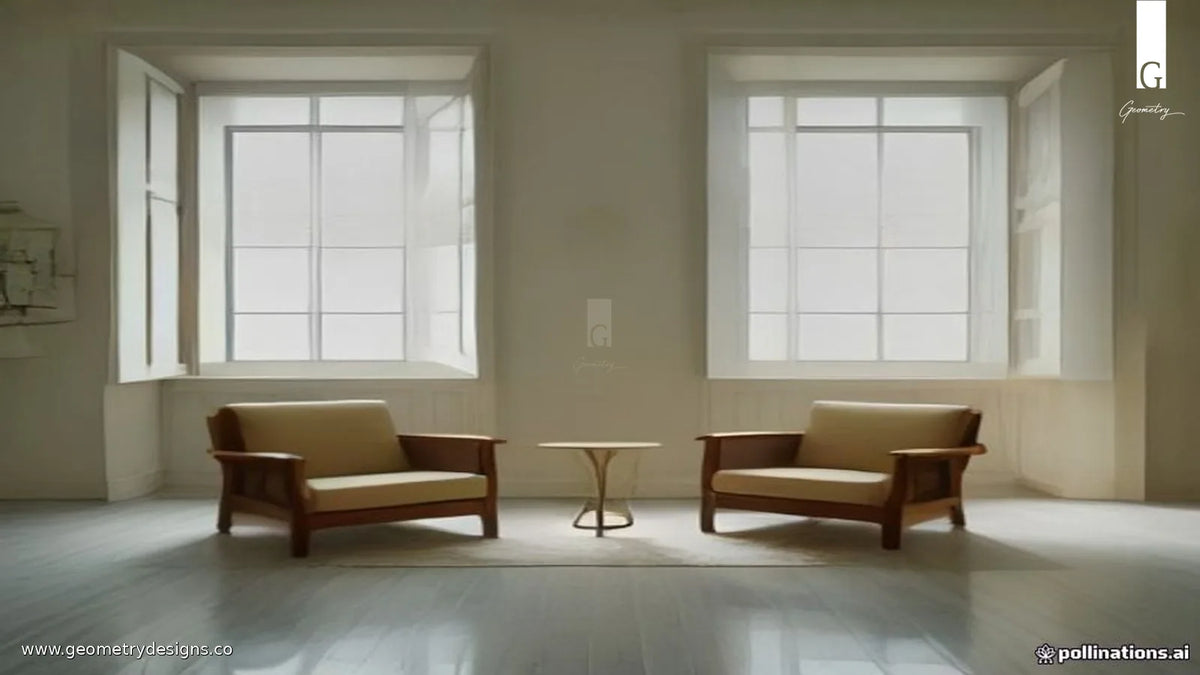
Answer: Make a living room feel expansive without renovation by clarifying circulation, reducing visual weight at eye level, repeating a short material vocabulary, and protecting negative space around handcrafted furniture so the room reads as calm volume rather than crowded inventory.
Many Indian apartments and villas feel smaller than their floor plan suggests. The issue is rarely square footage alone. It is blocked sightlines, heavy furniture silhouettes, competing finishes, and every wall asking for attention. Expansiveness is a design edit: you create breathing room for the pieces that matter.
This Geometry Journal guide shows how to make a living room feel larger without knocking down walls — using layout, scale, mirrors, lighting, and selective craft.
What makes a living room feel smaller than it is?
A room feels compressed when the eye cannot travel. Common compressors in Indian homes include:
- Furniture pushed to every wall with no clear primary path
- Tall, dark, or heavily patterned pieces stacked in the same zone
- Rugs that stop short of seating and chop the floor into islands
- Storage overflow and small accessories filling every surface
- Flat, even lighting that removes depth and shadow
Luxury, in Geometry's language, is not more objects. It is readable space: one clear conversation zone, supporting pieces that finish the story, and empty floor or wall treated as a design material.
How do you open circulation without moving walls?
Start with the path, not the sofa. Walk from the main entry into the seating zone and out toward the window, balcony, or dining edge. If you weave around corners of tables and chair arms, the room will feel busy even when it is tidy.
- Keep one primary circulation lane at least as wide as a comfortable single-person walk — preferably wider near the entry.
- Float seating slightly off the walls when possible so air and light can wrap the furniture silhouette.
- Align the coffee table with the sofa run rather than centering it as a visual obstacle in the middle of the path.
- In compact apartments, prefer fewer larger seating pieces over many small stools that multiply legs and clutter the floor plane.
Related: How to Check Room Flow Before Adding a Statement Piece is useful before you add a new focal chair or console.
Which furniture scale and height make a room feel larger?
Visual weight matters as much as footprint. Low-profile seating, open legs, and quieter upholstery help a room feel taller and lighter — even when the piece is substantial in craft.
- Choose sofa and lounge heights that leave clear wall above the backrest so the room can breathe vertically.
- Prefer open or lightly framed bases over solid boxed bases when the floor needs to read continuously.
- Limit one sculptural silhouette per zone; let supporting pieces stay quieter in outline.
- Avoid stacking tall plants, tall lamps, and tall art in the same vertical band unless they intentionally form one column.
Handcrafted furniture can still feel expansive when proportion and finish are calm. A Geometry statement seat should anchor the room without blocking how light and movement travel through it.
How do mirrors, colour, and materials expand perceived volume?
Mirrors expand axis and light when treated as architecture, not decoration. Colour and materials expand when they reduce contrast noise.
- Place one well-scaled mirror to catch daylight or a long sightline — not a busy mirror wall beside already sculptural furniture.
- Repeat a short material vocabulary: wood tone, soft textile, and one quiet metal family.
- Keep large wall planes calmer so craft details on furniture remain readable.
- Let rugs underwrite the seating group generously enough to unite pieces rather than fragment the floor.
For mirror thinking as spatial tool, see What Makes a Mirror Feel Architectural, Not Decorative. For calm editing, pair with How to Style a Luxurious Living Room Without Clutter.
How should lighting deepen space instead of flattening it?
Flat overhead light shrinks rooms. Layered light adds depth: ambient wash, a soft focus on the lead piece, and quieter secondary pools.
- Light the lead seating or a key wall plane; do not spotlight every object equally.
- Use warmer evening layers so Indian homes keep volume after sunset, when daylight disappears.
- Avoid glare that makes glass and screens dominate the sightline.
- Keep at least one quieter wall so the eye can rest after reading the composition.
For a fuller layout approach, read How to Create a Balanced Luxury Lighting Layout in Indian Living Rooms.
What checklist should you use before buying or rearranging?
- Name the primary circulation path and protect it.
- Confirm one visual lead in the seating zone (furniture or wall — not both shouting).
- Check sofa and lounge height against wall calm and window light.
- Reduce competing patterns and high-shine metals in the same band.
- Place mirrors for axis and daylight, not as extra decoration.
- Walk the room at evening light before finalising purchases.
- Remove one layer of accessory or lighting accent before removing a good furniture piece.
When you are ready to explore Geometry Designs seating, consoles, and room-making pieces, browse the Geometry Designs collection and more practical guidance in The Geometry Journal. Related reading: What a Designer Notices First in a Luxury Living Room and How to Blend Art and Handcrafted Furniture Without Visual Noise. For a bespoke conversation about a specific room, use the contact page.
FAQ
Can a small Indian apartment feel expansive with statement furniture?
Yes — if circulation is clear and the statement piece is the lead, not one of many competing silhouettes. One well-scaled handcrafted seat with quiet neighbours often feels larger than many small pieces.
Do mirrors always make a room feel bigger?
Only when they expand light or a real sightline. A patterned or crowded mirror arrangement can add visual noise and shrink perceived calm.
Should I choose lighter furniture colours only?
Not only. Mid-tone woods can feel expansive when the silhouette is open and surrounding walls stay quieter. Extreme contrast everywhere is what compresses the room.
Is renovation required to fix a cramped living room?
Often no. Layout, scale, lighting, and selective editing of accessories usually change perceived volume before any construction.
Where should I start if the room already feels crowded?
Clear the primary walk path first, then reduce one pattern layer or one tall stacked zone. Reassess before buying anything new.


