

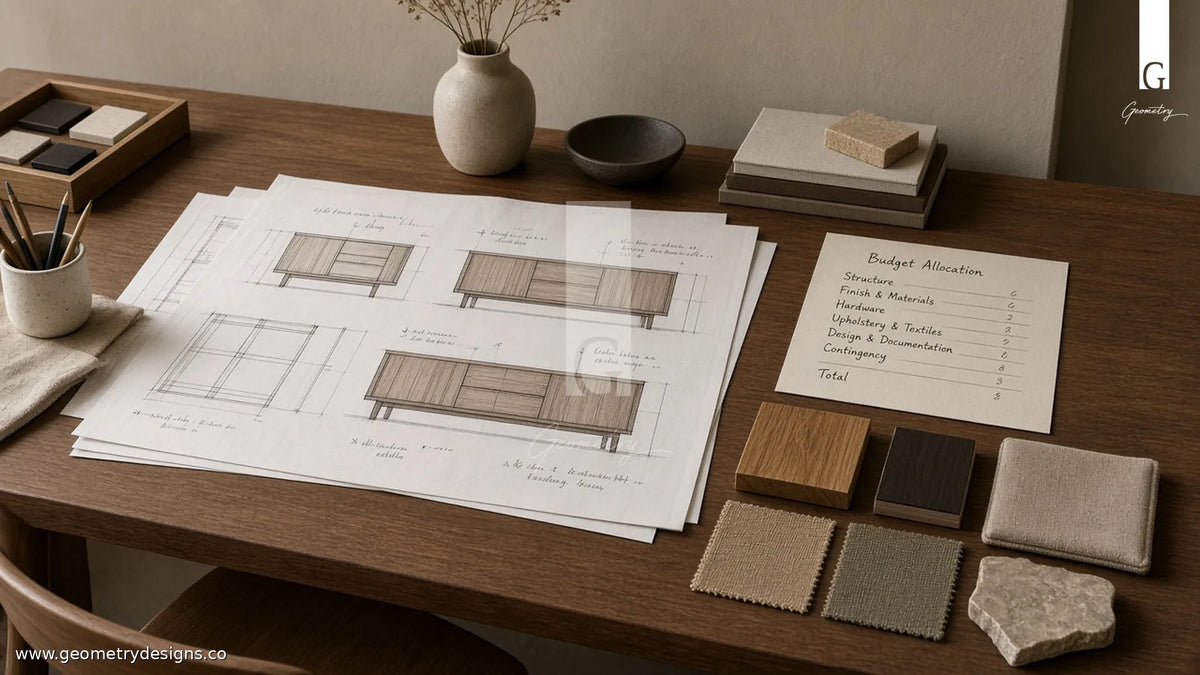
Short answer: Budget custom furniture by protecting the lines that carry craft—structure, joinery or frame integrity, finish labour, and fit—before you spend on extras. Put a clear share of the total toward the piece’s lasting construction, keep a contingency for measured revisions, and treat “cheaper fabric only” or “skip sample finishes” as craft risks, not savings. Geometry Designs frames budget as a design decision tool, not a race to the lowest quote.
In modern Indian luxury homes, custom work often fails quietly: the silhouette looks right on paper, then corners soften, finishes thin out, or proportions are locked before the room is measured. Pricing well means deciding what must stay expensive enough to stay honest—especially when humidity, guest load, and daily use will test every shortcut.
This Buying Intelligence guide shows how to structure a custom furniture budget, where cuts damage craft, and how to read a quote without inventing prices. Use it with catalogue piece or bespoke furniture: how to decide and what to ask before commissioning custom furniture in India, then brief work through Customise / Request a Quote when the allocation is clear.
What Should I Budget for When Buying Custom Furniture?
Start with four buckets that almost every bespoke piece needs: (1) design and measurement clarity, (2) structure and primary materials, (3) finish and detailing labour, and (4) delivery, installation, and a small contingency. Fabric, hardware, and decorative extras sit inside or beside those buckets—they should not replace them.
Buyers who reverse the order—locking a mood-board fabric first, then squeezing frame and finish—often discover the compromise only after the piece is in the room. Geometry Designs prefers the opposite sequence: confirm the job the piece must do, protect the construction that makes it last, then choose the visible skin.
How Do I Split Budget Between Craft, Finish, and Extras?
Use percentages as a planning aid, not a fixed Indian-market price list. A practical starting split for a single custom seating or case-goods piece is roughly: majority of spend on structure and primary materials; a meaningful share on finish and detailing; a smaller share on extras (special hardware, optional inlays, packaging theatre); and a contingency of about five to ten percent for measured changes after site check.
If the room brief is still moving—TV wall depth, foyer clearances, dining chair count—hold contingency higher until measurements settle. The same logic that guides how to read a furniture order specification before signing applies here: unclear dimensions become expensive after production starts.
Where Do People Accidentally Cut Craft Quality?
Common quiet cuts: thinner frames or cores that still look plump in a photo; fewer finish coats; skipping finish samples under your home lighting; replacing named hardware with generic substitutes; and compressing labour time on joinery or upholstery seams. None of these appear as a dramatic line item labelled “worse quality.”
They show up later as wobble, finish wear in humid seasons, or seams that twist after the first months of use—the same family of signals covered in craft posts such as what makes handcrafted wood joinery feel premium and recent seating durability checks. If a quote is dramatically lower with identical drawings, ask which of these lines moved.
Custom Furniture Budget Allocation Checklist
| Budget line | Why it matters | Protect or cut? |
|---|---|---|
| Measurement / site check | Locks clearances, door swings, and true fit | Protect. Cutting this creates remakes that cost more than the visit. |
| Structure / frame / primary material | Carries load, longevity, and proportion | Protect first. Weak structure cannot be rescued by expensive fabric. |
| Finish labour and samples | Colour, sheen, and wear under your light | Protect. Sample under home lighting before bulk finish. |
| Upholstery core and workmanship | Comfort recovery and seam honesty | Protect for seating; do not swap only the cover and call it “same piece.” |
| Hardware and fittings | Daily touchpoints and alignment | Protect named specs or approve a written substitute. |
| Extras / decorative upgrades | Personality after craft is secure | Flexible. Cut here before cutting structure or finish labour. |
| Delivery / install / contingency | Handling, site protection, measured revisions | Keep a clear contingency (often ~5–10%) until drawings are final. |
How Do Catalogue and Bespoke Budgets Differ?
Catalogue pricing usually packages design amortisation, known sizing, and repeatable finishes. Custom pricing spends more on measurement, one-off patterns, and finishing that must match your room rather than a floor sample. That does not automatically mean “custom is always better”—it means the budget must fund the uniqueness you requested.
If a catalogue piece in Furniture or Arm Chairs already solves fit and craft, spend the difference on rugs, lighting, or a second piece instead of forcing a custom brief. If the gap is proportion, use pattern, or humidity-ready finish for your home, bespoke earns its allocation. Revisit the decision frame in catalogue vs bespoke before you open a quote war.
What Questions Protect Craft When the Quote Arrives?
Ask the quote to name: structure/material assumptions; finish process and sample policy; what changes if you swap fabric or hardware; lead-time drivers; and what the contingency covers. Require that any price reduction list the exact craft line that moves—so “value engineering” cannot hide a thinner core behind a prettier cover.
Bring photos of the room, measured clearances, and the job the piece must do (daily sofa, guest chair, foyer console). Geometry Designs can respond through Customise / Request a Quote or Contact with options that keep structure honest rather than racing an unverified low number.
When Is a Smaller Budget Still Honest?
A smaller budget is honest when the brief is simpler: fewer custom curves, a finish already proven in your climate, standard hardware you have approved, or a catalogue base with limited made-to-order changes. It becomes dishonest when the drawings stay complex while the money only covers a showroom photo look.
Prefer fewer pieces done well over a full room of compromised structure. The same calm judgment behind what a designer notices first in a luxury living room applies to money: proportion and lasting finish read longer than accessory spend.
FAQ
What should I budget for when buying custom furniture?
Cover measurement clarity, structure and primary materials, finish labour and samples, and delivery/install with contingency. Add fabric and hardware as named lines—do not let them replace structure.
Should I cut fabric quality to keep the frame?
Usually protect the frame and finish labour first. A weaker cover can be refreshed later; a weak structure cannot. If fabric is the hero of the brief, fund it after structure is secured, not instead of it.
How large should contingency be?
Often about five to ten percent until site measurements and drawings are final. Raise it when the room brief is still moving or multiple trades share the same wall.
Do I need exact market prices to plan well?
No. Start with allocation percentages and named craft lines, then request a written quote. Avoid inventing INR figures; compare quotes by what they protect, not only the bottom number.
When should I stay with catalogue instead of custom?
When fit, comfort, and finish already pass in a live piece and custom would only change colour. Spend the difference elsewhere, or use limited made-to-order options instead of a full bespoke brief.
Custom furniture budgets fail when extras win and craft loses. Allocate for structure, finish, and fit first; keep contingency until measurements settle; and ask every cheaper quote which craft line moved. When you are ready to brief Geometry Designs with room photos and priorities, start at Customise / Request a Quote or explore proven silhouettes in Furniture and Arm Chairs before you customise.


