

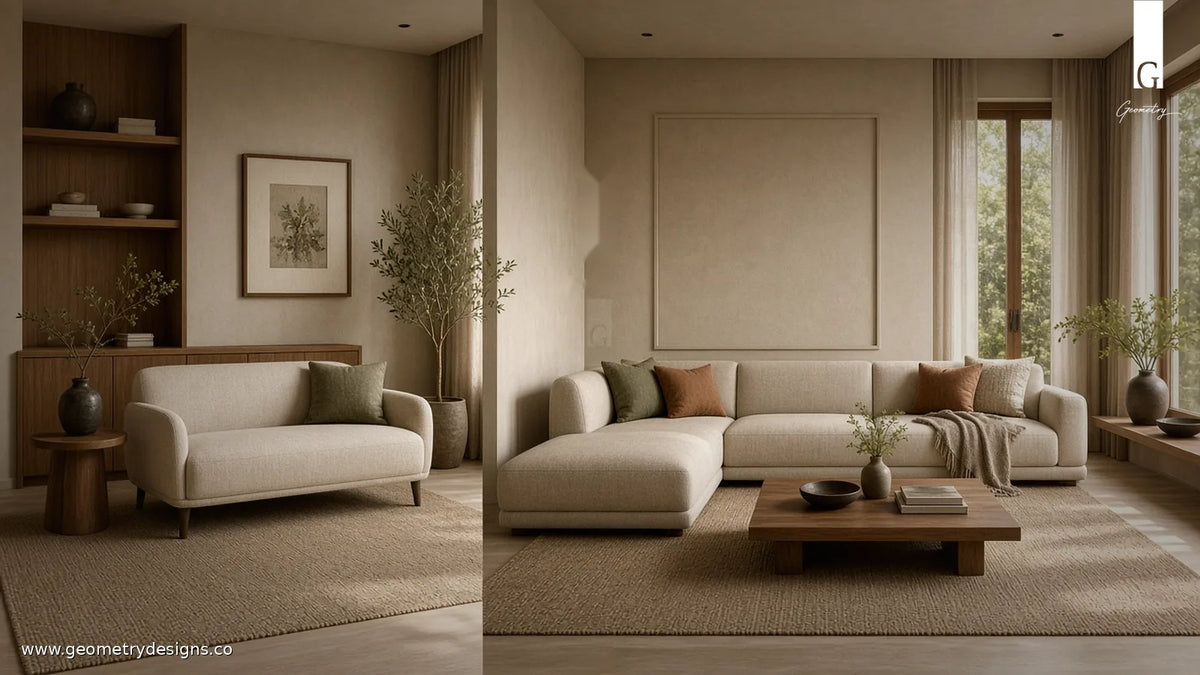
Short answer: A designer first notices proportion, light, circulation, the room’s true anchor piece, and whether materials feel honest up close. In a luxury living room — especially in modern Indian homes — those five cues reveal whether the space will feel calm under daily use, or only look styled for a photograph. Furniture comes second; the room’s structure comes first.
Geometry POV: At Geometry Designs, a first walkthrough is not about collecting pretty references. It is a quiet audit: what already works, what fights the architecture, and what a new piece must resolve. Indian luxury living rooms often carry strong daylight, mixed seating habits, festival hosting, and finishes that must survive real life. The first pass separates genuine design from decoration.
Why does first-pass assessment matter before you buy furniture?
Most living-room mistakes start with shopping too early. A beautiful sofa ordered before circulation is clear will always feel slightly wrong. A console bought before the light is understood can look flat by late afternoon. Designers reverse the sequence: read the room, then choose the object.
Homeowners and interior designers benefit from the same order. Homeowners feel friction first — crowded aisles, glare on the TV, a corner that never gets used. Designers name the cause: scale off by a few inches, light that washes out texture, an anchor piece that is not actually anchoring. Naming the cause early saves returns, redesigns, and regret.
What does a designer notice first when assessing a living room?
Five things, usually in this order:
- Proportion — Are seating heights, wall lengths, rug size, and ceiling rhythm in conversation, or is one element shouting?
- Light — Where does daylight enter, how does it move through the day, and which surfaces go dead without layered artificial light?
- Circulation — Can people walk naturally from entry to seating to balcony or dining without clipping corners?
- Anchor piece — What currently holds the room’s identity — sofa, statement chair, console, rug, or nothing yet?
- Material honesty — Do wood, fabric, metal, and stone look like themselves at arm’s length, or only in a wide shot?
If any one of these five fails loudly, new furniture will not “fix” the room. It will inherit the problem.
How should you read proportion and light in an Indian luxury living room?
Proportion is not only “is the sofa big enough.” It is whether the seating line matches the wall and window rhythm, whether the coffee table leaves a workable reach, and whether negative space feels intentional. In apartments with lower ceilings, oversized backs and tall arms can shrink the room. In villas with tall volumes, underscaled seating can look temporary.
Light in Indian homes is often strong and directional. A designer notices:
- Harsh midday glare on pale fabrics and screens
- Warm evening light that suddenly makes wood and cane look richer
- Dark corners that need a lamp or reflective surface, not more décor objects
Material choices should survive both states. If a finish only photographs well at golden hour, it is not ready for daily living.
How do circulation and the anchor piece decide what comes next?
Circulation is the honesty test. Tape walk paths if needed: sofa front to coffee table, sofa end to doorway, seating to balcony. If guests already squeeze past, do not add depth. If a long wall creates an unused lane, the room may need a better anchor line — a longer seating piece, a resolved console, or a rug that finally defines the zone.
The anchor piece is whatever the eye lands on first and returns to. Sometimes that is a statement sofa. Sometimes it is a chair with presence, a console under art, or a rug with enough scale to hold the conversation area. A designer asks: is this anchor earning its job, or is the room still searching? Only then does shopping make sense.
Designer first-pass checklist: luxury living room
| Check | Pass signal | Fix before buying more furniture |
|---|---|---|
| Proportion | Seating, rug, and wall lengths feel related; gaps look intentional | Resize footprint, change height language, or rethink the rug scale |
| Light | Day and evening both show texture; no dead corners | Adjust curtains, add layered lamps, relocate reflective surfaces |
| Circulation | Natural walk paths; no clipped corners during real use | Reduce depth, shift seating, clear the primary aisle |
| Anchor piece | One clear identity holder; secondary pieces support it | Commit to one hero role; demote competing statements |
| Material honesty | Wood, fabric, and metal still feel premium at close range | Upgrade finish quality; remove props that only work in photos |
Score it simply: if two or more checks fail, pause shopping. Resolve the room structure first. If all five pass, you can choose furniture with confidence — catalogue or bespoke — because the brief is clear.
Where does Geometry Designs come into the first pass?
Geometry Designs approaches living rooms the same way: room logic before object desire. Browse considered pieces and design language at https://www.geometrydesigns.co/. When the first-pass checklist shows a proportion, circulation, or material problem that a standard piece cannot resolve, bring photos and measurements through https://www.geometrydesigns.co/pages/contact for a fit-led conversation.
FAQ
What does a designer notice first when assessing a living room?
Proportion, light, circulation, the true anchor piece, and material honesty — usually before fabric colour or décor trends.
Can a luxury living room look expensive and still fail this checklist?
Yes. High finishes with blocked aisles, weak light, or competing “hero” pieces feel stressful in daily use, even if they photograph well.
Should homeowners use the same checklist as designers?
Yes. Homeowners can run a practical version: walk the paths, sit at different times of day, and ask whether one piece clearly anchors the room.
When should you buy a statement piece after the first pass?
Only after circulation is clear and you know whether the new piece must become the anchor or support an existing one.
Is material honesty only about solid wood or natural stone?
No. It means the finish, joinery, and fabric hand-feel match the promise of the room. Luxury is what holds up at close range, not only at a distance.
Walk your living room with this five-point checklist before your next furniture decision — then share room photos and measurements with Geometry Designs at https://www.geometrydesigns.co/pages/contact if you want a designer-led read of proportion, light, and fit.


