

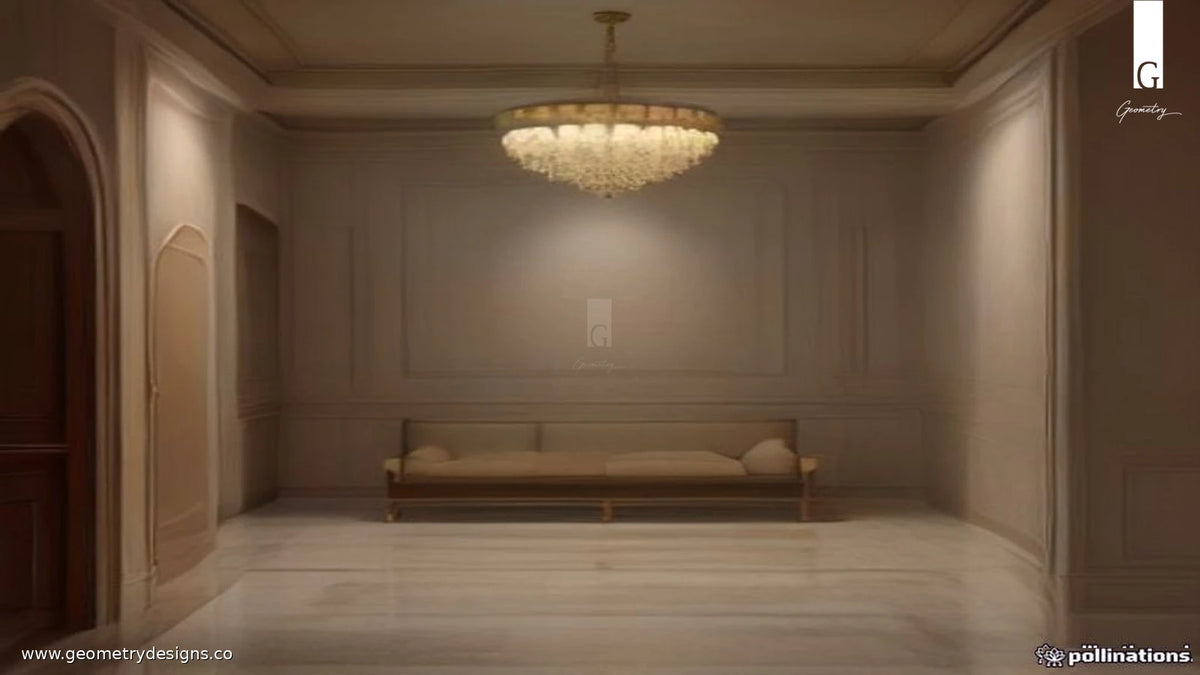
Short answer: Layer lighting in a luxury room by planning three jobs - ambient wash, task pools, and a few intentional accents - then editing until the room feels calm, not busy. A balanced luxury lighting layout for Indian homes keeps fixtures few, warm, and purposeful so furniture, craft, and people read clearly without visual clutter.
Geometry POV: At Geometry Designs, light is part of how a room earns its quiet luxury. Handcrafted wood, upholstery texture, and metal edges all change character under different layers of light. Indian Luxury Decoded, for lighting, means designing for evening hosting, daytime glare, and the way a statement piece should feel when the room softens after dusk - without filling the ceiling with competing fixtures.
How do you layer lighting in a luxury room without visual clutter?
Start with roles, not shopping lists. Ambient light sets a soft base so the room never feels like a cave. Task light supports reading, conversation corners, or a console moment. Accent light is selective: it reveals grain, art, or a silhouette - it should not compete with every other lamp in the room.
Clutter usually appears when every layer tries to be dramatic at once. Prefer one clear accent story per view, keep colour temperatures related (warm family), and give each fixture enough visual breathing room from the next. If you can name what each light is doing in one short phrase, the layout is usually balanced. If you cannot, edit before you add another piece.
What lighting layers belong in an Indian living room plan?
Most Indian living rooms need a calm daytime path and a warmer evening path. Daylight and sheer curtains often carry morning ambient; evenings need a soft artificial base plus a few directed pools. Festival hosting and frequent guest seating make glare control and flexible dimming more important than a single bright overhead.
- Ambient - Recessed or soft ceiling wash, or a gentle uplight, kept even and low enough that walls do not glare.
- Task - Floor or table lamps near seating; a console lamp for entry-adjacent living rooms; reading light that does not spill harshly across faces on a sofa.
- Accent - One or two focused washes on a craft detail, art, or architectural niche - not a string of competing spots.
- Control - Separate circuits or dimmers so evening hosting can drop ambient while keeping one accent alive.
This is layout logic, not a product catalogue. Fixture style should support the furniture story you already chose - not fight it.
How should lighting support handcrafted furniture and statement seating?
Handcrafted surfaces need honest light. A side-grazing accent can reveal grain and joinery; a flat, cold overhead can flatten the same piece. Place accent light so it clarifies the hero piece from a natural seating view, and keep ambient warm enough that wood and fabric still feel invitational.
For statement seating, avoid a single harsh downlight that casts hard facial shadows during conversation. Prefer a nearby soft task pool plus ambient that wraps the seating group. Geometry Designs treats lighting as part of how craft and silhouette are read in a modern Indian luxury room - the same care you give proportion and finish.
Related reading on how light changes craft perception: How Lighting Changes the Way Handcrafted Furniture Feels.
Checklist: balanced luxury lighting layout before you buy more fixtures
| Check | Balanced signal | Clutter risk |
|---|---|---|
| Layer roles | Ambient, task, and accent each have a clear job | Every lamp tries to be a statement |
| Fixture count | Few pieces, each earning its place | Matching sets filling every corner |
| Colour temperature | Related warm tones across layers | Mixed cool/warm fighting in one view |
| Furniture read | Hero piece silhouette and texture still clear | Overhead glare washes out craft detail |
| Evening hosting | Ambient can dim; one accent remains | Only all-on or all-off options |
| Sightlines | Fixtures do not crowd art, mirrors, or walk paths | Lamps blocking circulation or competing with consoles |
Score simply: if two or more clutter risks appear in the main living view, remove or relocate before ordering another fixture. Luxury lighting layouts feel edited - not maximal.
Where does Geometry Designs fit in a lighting-led room plan?
Geometry Designs designs furniture and decor meant to hold under real Indian light - day into evening. Explore the current collection language at https://www.geometrydesigns.co/collections/all, browse Journal guidance at https://www.geometrydesigns.co/blogs/the-geometry-journal, and when you want a lighting-aware read of seating, consoles, or craft placement for your room, share photos and context through https://www.geometrydesigns.co/pages/contact.
FAQ
How do you layer lighting in a luxury room without visual clutter?
Assign ambient, task, and accent roles first; keep fixtures few and warm-related; give each light a clear job; edit competing drama before adding another piece.
Do Indian living rooms need different lighting than open Western plans?
Often yes in practice: stronger daytime glare control, warmer evening hosting, and flexible layers for guests matter more than a single bright overhead look.
Should every seating corner get its own statement lamp?
Not usually. One strong task or accent story per primary view keeps the room calm; secondary corners can share softer ambient.
Can recessed lights alone create a luxury layout?
Rarely. Recessed ambient helps the base, but task and selective accent layers are what make furniture and craft feel intentional after dusk.
What should I decide before buying more fixtures?
Confirm each layer's job, check colour-temperature harmony, test evening dimming, and verify the hero furniture still reads clearly from the main seating view.


