

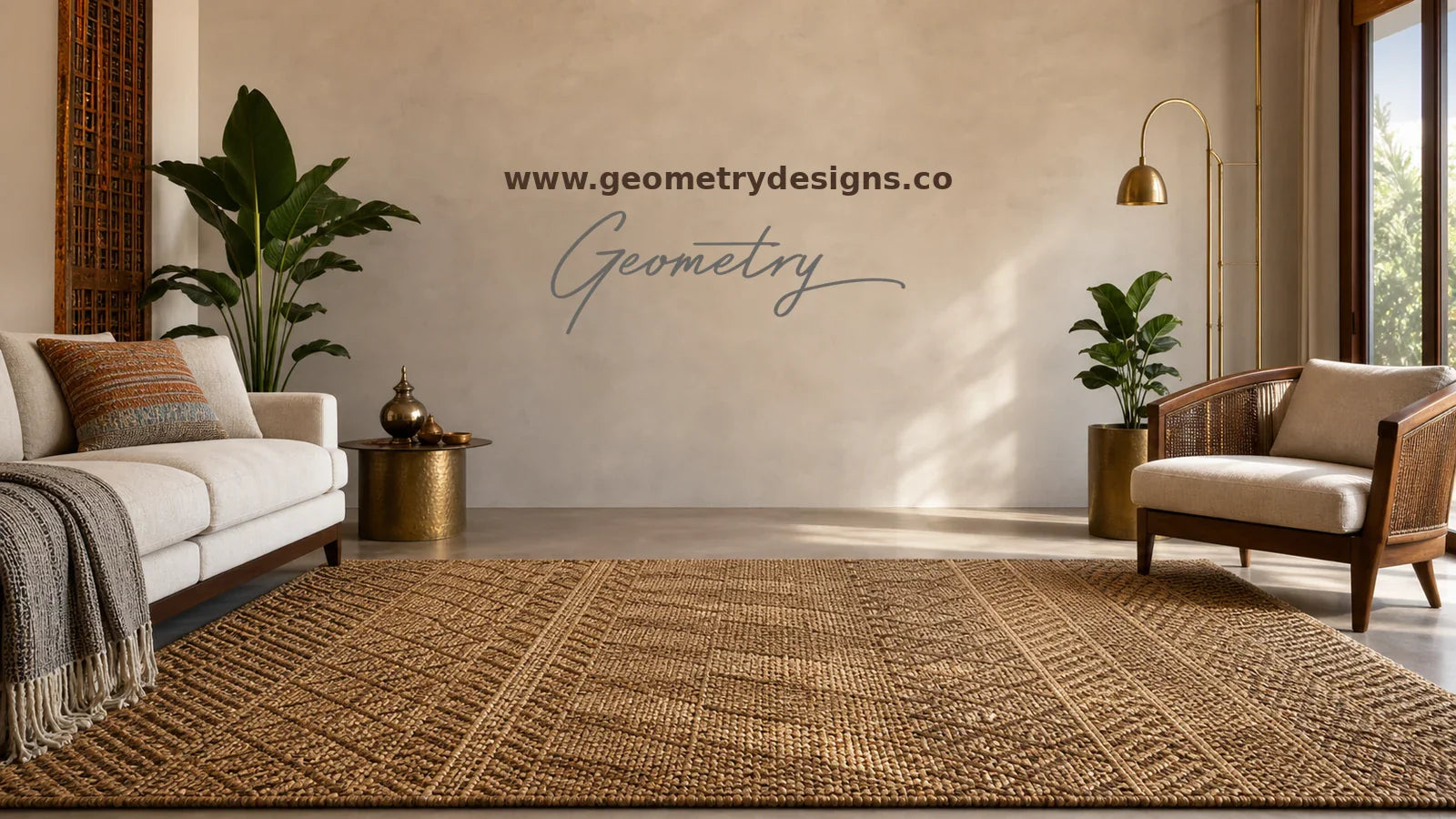
Short answer: Choose a rug for a luxury Indian home by checking scale first, then pile, weave, colour temperature, furniture placement, edge detail, maintenance comfort, and how the rug supports the room's main seating or table. A good rug should anchor the room without making the furniture feel trapped.
In a modern Indian luxury home, a rug is not a last-minute soft furnishing. It is the floor plane that decides how generous, grounded, and finished the room feels. Geometry Designs looks at rugs the same way it looks at furniture: proportion first, beauty second, daily living always.
How large should the rug be?
Scale is the biggest buying mistake. A rug that is too small makes a premium room feel nervous, even when every chair is beautiful. In a living room, the rug should visually connect the main seating pieces instead of floating like an island under the coffee table.
Before ordering, tape the rug outline on the floor and walk around it for a day. Check door swing, circulation, chair pull-back, and whether the rug edge lands in an awkward walking path.
What pile and texture suit Indian homes?
For everyday living, choose texture that feels rich but practical. A very plush pile can look inviting but may be harder around dining chairs, pets, and dust-heavy zones. A flatter weave can be easier to live with and still feel luxurious when the material, border, and pattern are chosen well.
The best choice depends on the room's job: a lounge can take more softness; an entryway or dining zone needs more discipline.
How should colour and pattern be judged?
Look at the rug in the same light as the room. Warm daylight, evening lamps, marble floors, wood tones, brass, and upholstery can change how a rug reads. If the furniture is already expressive, choose a quieter rug. If the room is too plain, a patterned rug can become the one handmade gesture that gives it soul.
Designer checklist before choosing a rug
- Scale: Does it connect the furniture group, not just sit under one table?
- Circulation: Are rug edges away from door swings and main walking paths?
- Texture: Does the pile suit daily use in that room?
- Colour temperature: Does it work with wood, stone, brass, and upholstery already in the space?
- Pattern hierarchy: Is the rug the hero, the support, or the calm base?
- Maintenance: Can the household realistically care for it?
How does the rug support furniture?
A rug should make furniture feel intentional. It can soften a strong chair, ground a console wall, warm a marble floor, or create a calm boundary for conversation. If you are choosing furniture and rug together, decide which piece gets the first look and let the other behave.
Browse Shop all Geometry pieces for furniture that can sit with a statement rug, or study Geometry projects for proportion, material rhythm, and room-level balance. For a room-specific plan, contact Geometry Designs.
FAQ
Should all furniture legs sit on the rug?
Not always. The important thing is visual connection. In many living rooms, front legs on the rug can work if the rug is large enough to hold the seating group.
Can a patterned rug work in a modern home?
Yes, if the pattern has enough breathing room around it. Keep surrounding upholstery, cushions, or wall detail quieter when the rug is expressive.
What should I check before ordering online?
Check the exact size, pile height, weave type, colour in natural and evening light, care instructions, edge finish, and return or exchange terms before confirming.
How do I avoid a room looking cluttered?
Choose one hero: the rug, the chair, the art, or the console. If everything is shouting, reduce contrast and surface styling before replacing the main pieces.
CTA: contact Geometry Designs for rug, furniture, and room proportion guidance rooted in Geometry's About Geometry point of view.


