

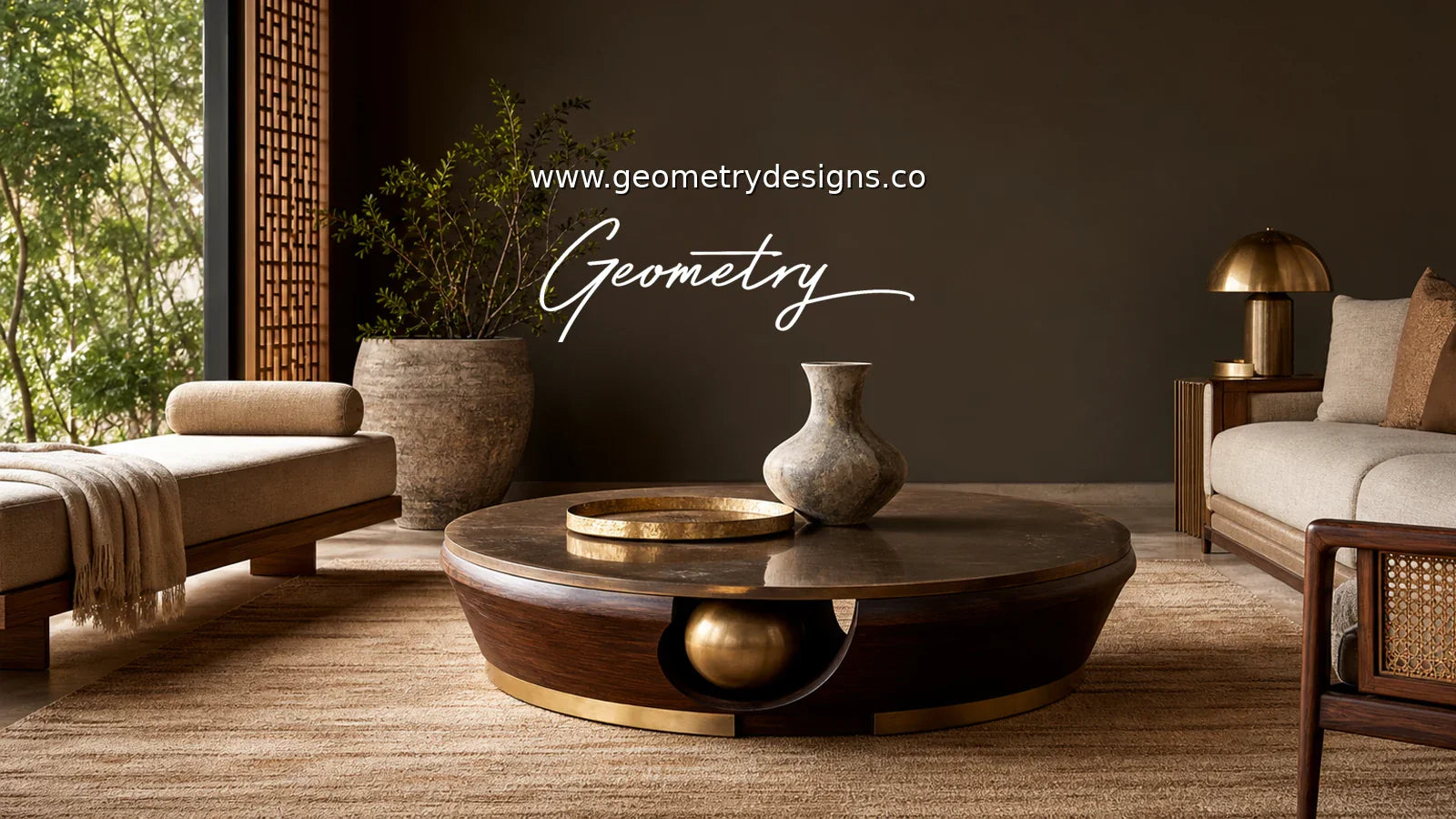
Short answer: A luxury coffee table should do more than fill the centre of a seating area. Choose it for proportion, movement, surface use, visual weight, and how well it connects the sofa, chairs, rug, lighting, and decor into one calm conversation zone.
In a modern Indian luxury home, the coffee table is often the quiet piece that decides whether the room feels finished or simply furnished. Geometry Designs treats it as a working anchor: it must support daily use, hold styling beautifully, and still leave the room easy to move through.
What makes a coffee table useful, not just decorative?
A useful coffee table creates order. It gives people a place to set a cup, anchor a tray, display one meaningful object, and understand where the seating zone begins and ends. Decorative value matters, but the table should not become a museum plinth that nobody can live around.
Look for three layers: enough surface for use, enough negative space around the table for movement, and enough design character to hold the room together.
How should you judge scale?
Scale comes before style. A table that is too small makes the seating float apart; a table that is too large turns the centre of the room into a roadblock. The safest test is simple: can someone sitting on the main sofa or chair reach the table comfortably, and can people still walk around it without adjusting their path?
If the room already has heavy seating, choose a table with visual breathing room. If the seating is light, a stronger table can give the room weight.
Which shape works best?
- Round or oval: best when the room needs softness, easier movement, or child-friendly flow.
- Rectangle: useful with long sofas and formal living rooms.
- Square: works when seating surrounds the table from multiple sides.
- Sculptural: best when the room needs one memorable centrepiece, but only if function is not sacrificed.
A quick coffee table checklist
| Check | What to ask |
|---|---|
| Room flow | Can people move around it easily? |
| Surface use | Will it hold daily objects without looking crowded? |
| Visual weight | Does it balance the sofa and chairs? |
| Rug relationship | Does it sit confidently within the rug zone? |
| Styling discipline | Can one tray, vase, or book stack be enough? |
How do you style it without clutter?
Use fewer objects with stronger intention. One tray, one vessel, and one low object is often enough. Keep the tallest object off-centre so sightlines across the room remain open. If the table itself has a strong form, reduce the styling; let the piece do the work.
For room context, browse Projects or start with Shop All to understand how Geometry pieces sit together across categories.
Geometry POV: the centre should feel calm
The best coffee table does not shout for attention every second. It gives the room a centre, holds the everyday beautifully, and lets the seating arrangement feel deliberate. That is the quiet luxury move: useful, composed, and just dramatic enough.
FAQ
Should a coffee table match the sofa?
No. It should relate through proportion, colour temperature, or material mood, but an exact match can make the room feel flat.
Is a round coffee table better for small rooms?
Often, yes. Round and oval shapes usually make movement easier when space is tight.
How much should I style on a coffee table?
Keep it edited. Use enough objects to make the table feel intentional, but leave usable surface free.
Can a coffee table be the main statement piece?
Yes, if the seating and rug are calmer. A sculptural table can anchor the room when the rest of the composition gives it space.
CTA: Planning a living room that needs a better centre? Contact Geometry Designs to discuss proportion, room flow, and the right table mood.


