

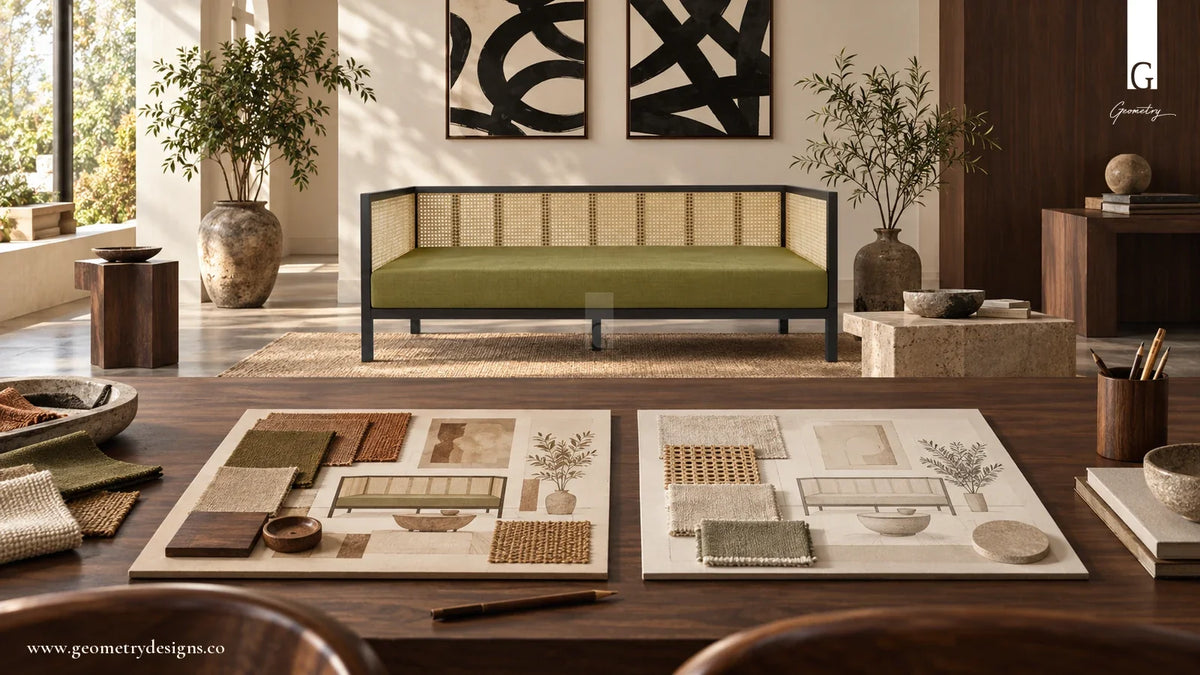
Short answer: Compare two room concepts against the same brief: who uses the room, what must fit, which existing pieces stay, and what needs confirming before an order. Review both plans at the same scale and ask each to solve the same everyday situations. Choose a direction before collecting details from both.
One scheme is warm and layered. The other is lighter and more sculptural. Both look convincing on a presentation board, and that is exactly why choosing between them can be difficult. A furniture decision becomes clearer when the comparison moves beyond which image is more beautiful.
A concept describes a direction. It does not, by itself, confirm that the proposed furniture fits, that the upholstery behaves as expected, or that every finish is available. The aim of a good comparison is to discover what each direction gives you, what it asks you to give up, and what remains unresolved.
Are both concepts answering the same brief?
Write a short, shared brief before comparing either option. It might say: a living room for two people on ordinary evenings, space for visiting family, one existing painting that stays, and a clear route to the balcony. Include the pieces you own, the activities that matter, and the decisions you are willing to change.
If one proposal assumes the old sofa stays and the other replaces it, you are comparing two different scopes. That can be a useful choice, but name it. Otherwise the more complete proposal may appear better simply because it solves more of the problem.
Keep the brief short enough to use during the discussion. Five clear priorities are more useful than a long list in which everything is equally important.
What should be compared side by side?
Ask for the same information for both directions. Use the same room measurements, drawing scale, existing furniture and basic viewing angles. A close-up of beautiful fabric cannot answer the same questions as a full room plan.
| Decision | Ask of concept A | Ask of concept B |
|---|---|---|
| Everyday use | Where do the usual activities happen? | Where do the same activities happen? |
| Movement | What route connects the doors and seats? | Is that route equally clear? |
| Existing pieces | What stays and what changes? | Are the assumptions the same? |
| Furniture footprint | Which dimensions are confirmed? | Which dimensions still need checking? |
| Visual character | What is the main focal point? | What does the eye notice first? |
| Practical questions | What needs a sample or clarification? | What is still unresolved here? |
This is a discussion sheet, not a mathematical score. A room can win on five minor preferences and still fail your most important need. Identify the decisions that matter most to the people who will use it.
How do you test the room beyond the mood board?
Walk through a normal day in each proposal. Imagine entering with a bag, setting down a drink, sitting with a book, opening storage, and joining a conversation. Then try a less frequent situation, such as several visitors arriving together. Follow the sequence rather than examining each object in isolation.
A plan may look generous while a chair is tucked neatly under a table. Ask what happens when someone sits down or a cabinet door opens. Mark the proposed furniture footprint in the actual room when possible, using measurements supplied for the piece. Do not estimate dimensions from a styled photograph.
For example, Geometry's Cane Affair offers a visually open combination of dark framing, woven panels and an upholstered seat. Those visible qualities can inform a concept. They do not establish how much floor space it needs in your particular room. Confirm the current product measurements before treating the placement as resolved.
Can you borrow the best details from both concepts?
Yes, but first decide which concept provides the room's main structure. That includes the furniture arrangement, the dominant shapes and the overall balance of colour and texture. Then test individual changes within that structure.
Taking a sofa from one scheme, two patterned chairs from the other, and a different rug from a third reference can quietly create a new concept that has never been reviewed as a whole. If you combine details, ask to see the revised room together before approving it.
Keep a simple change list: what was replaced, why, and what else needs checking because of it. A deeper sofa may change a table position. A stronger upholstery pattern may change the balance around an existing painting. Small decisions can have neighbouring effects.
What belongs in the final decision record?
Record the chosen direction in words as well as pictures. State what stays, what is being ordered, which dimensions and finishes have been confirmed, and which questions remain open. Attach the current plan and the relevant sample references so an earlier image does not become the accidental instruction.
The concept approval and the furniture order are related decisions, but they answer different questions. A beautiful scheme still needs a clear item specification. Our guide to reading a furniture order specification provides a useful next check before committing to the pieces.
Frequently asked questions
Should I choose the concept with more statement pieces?
Not automatically. Compare how each room supports the activities and visual character you want. One expressive piece with thoughtful supporting furniture may answer the brief better than several competing focal points.
Can two concepts be compared without a floor plan?
You can compare mood, colour and visible material relationships. Furniture fit and movement remain unresolved until the proposals use the room's actual measurements and the proposed pieces' dimensions.
What if different family members prefer different concepts?
Separate preferences about appearance from practical needs. Identify the shared priorities first, then ask which details can change without weakening the room's main arrangement. A revised option should be reviewed together.
Does choosing a concept mean the finishes are approved?
Only if that was explicitly part of the decision and the relevant samples were reviewed. Record unresolved fabric and finish selections clearly instead of treating a presentation image as a confirmed material choice.
A useful concept comparison ends with a direction you can explain and a short list of decisions still to resolve. Bring that clarity into the furniture brief.


